
What Does It Mean to Act on Conviction? A Quiet Lesson from a Playground Stranger

Updated: Mar 8
The light was starting to turn gold, the way it does right before dinner when everyone knows they should head home, but no one quite wants to. I was sitting on the grassy slope by the playground, watching my son sprint across the field in a game of tag with a girl half his size and just as fast.
There is a particular kind of peace in that hour. The hum of distant traffic. Mothers are encouraging children to do brave things. Children shouting rules that change mid-game.
That’s when I heard it.
“Excuse me. Could I interrupt your evening for just a minute?”
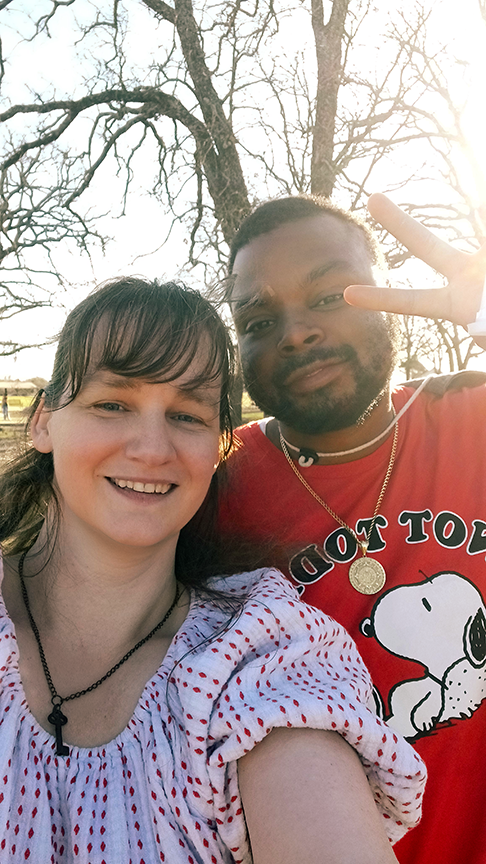
I turned toward the voice and had to lift my hand to shield my eyes. The sun was directly behind him, turning him into a silhouette at first. When my vision cleared, I saw a couple standing there, warm, open, slightly tentative, the way people are when they are doing something that pushes them past their comfort zone.
They weren’t selling anything.
They were offering fruit.
And conversation.
He began talking about how heart disease is such a large problem; one you rarely hear about on the news, yet one that quietly touches so many lives here in America. He spoke about the choices we are given in the grocery store: cheap, nutritionally empty foods piled high on shelves, or the healthier options that cost more, or take more thought. He described handing a man some fruit while they both stood in front of shelves of tobacco. Small moments like that, he said, felt powerful in their simplicity.
Earlier, he had tried standing still with a sign that read “Free Fruit.” He thought it would catch people’s attention. Instead, it drew suspicion. People slowed, glanced, then moved on. In a culture so wary of generosity, so accustomed to hidden agendas, the sign didn’t feel like a bridge; it felt like a wall. Leaning back slightly against the sun’s glare, he said, “That’s not really me.”
So he started walking.
Bench to bench, he wove through the park, introducing himself, offering fruit, letting people decide whether to talk.
He told me about the people he met through his walks, how almost everyone seemed to carry a story. Children and parents facing hard lives, quiet lives most of us wouldn't be able to guess. Stints, surgeries, struggles. “It’s kind of overwhelming,” he admitted, the weight of it showed on his face and broadened his smile. I could see it, the tension of blooming responsibility mingled with the quiet satisfaction of purpose. Each person he encountered carried a fragment of the problem he was trying to address.
Their stories reminded him why the work mattered, and also that he was stepping into something deeper than he had anticipated. You could hear it in the pacing of his words. But there was something steadier underneath it: a growing conviction, a quality too rare in many communities. That's a quality we wish to instill in our children.
His companion handed me a single sheet of paper, crisp and simple, with QR codes and a few lines printed in bold. “Heart disease remains the leading cause of death in the United States,” it read. “By making positive changes to our diets, tweaking our lifestyles, and embracing innovative thinking, we can win this battle together.”
Below that, in slightly smaller font: “ 'My Heart' is my way of fighting this thing... The fight starts in you. With your heart.”
We talked for longer than I expected. The sun dipped a little more, beaming through the tops of the trees, while the basketballs continued to echo in rhythm across the court. Even in all this ordinary noise, the quiet serenity of the couple’s work threaded through the space.
I told him what I believe: sometimes you will never know the impact of your efforts. The ripples are often invisible. The conversations you have might be the one small moment that tilts the scale for someone, enough that they make a better choice tomorrow, take a step toward health, or see something in a new light.
He may never know who he helped. But he went out anyway, carrying fruit and conviction in equal measure. And that is the part that stayed with me: adults willing to step into the world, imperfectly, courageously, without immediate applause.
This is what we hope our education produces - not people who can recite facts or perform knowledge on command, but adults who see a problem and act. Adults who adapt when their first attempt fails. Adults who can carry uncertainty and discomfort without turning away. Adults who understand that influence is rarely immediate, rarely visible, but still essential.
Conviction is not a viral post or a flashy campaign. It is a man walking through a park, talking to strangers, quietly learning how to make a difference while the sun slides behind the trees, children laughing, basketballs bouncing, the ordinary world moving on all around him.
Korey Kendrick's 'My Heart' campaign against Heart Disease can be found here:

Comments